
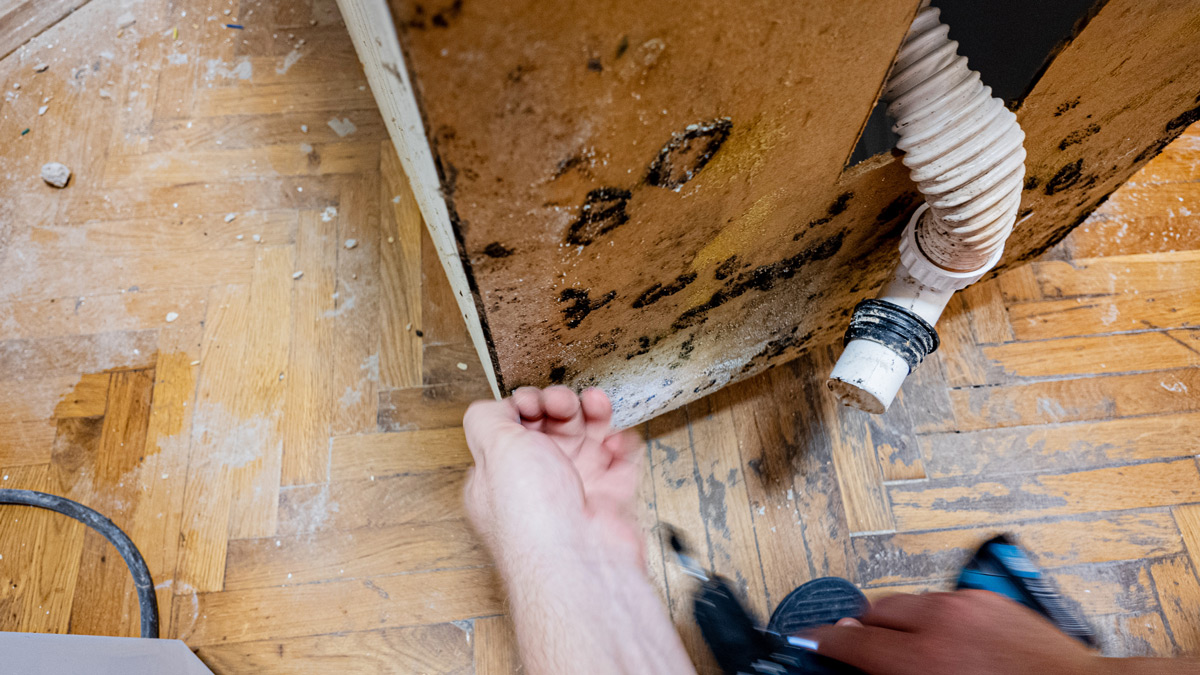
Mold is one of those things you usually don’t think about until you smell it or you see a weird spot spreading on the wall. The annoying part is that mold doesn’t always show itself right away. A lot of the time it’s growing in places you never look, and by the time you find it, it’s already turned into a bigger problem.
The good news is you can catch a lot of mold issues early just by knowing where it likes to hide and what the early signs look like. The EPA also points out that mold can start growing within 24 to 48 hours when moisture is present, so the faster you spot moisture, the better your odds of avoiding a mess.
1. Under Sinks and Inside Cabinets
If there’s one place I’d tell every homeowner to check more often, it’s under the sinks. A slow drip, a loose fitting, or even condensation on cold pipes can keep that cabinet area damp for weeks without you noticing. And dark + damp + wood is basically mold’s favorite combo.
What to look for under the sink
Look for warped wood, bubbling or peeling cabinet material, dark staining, or that “old basement” smell when you open the doors. If you wipe the cabinet floor and it feels damp or tacky, don’t ignore it. Even if you don’t see mold yet, moisture is the real warning sign.
Quick prevention tip
Stick a cheap moisture-absorber or paper towel down there for a few days. If it’s getting damp again, you’ve probably got a small leak or ongoing condensation you need to fix.
2. Basements and Lower Levels
Basements are mold-prone for obvious reasons: they’re cool, they’re often humid, and airflow usually isn’t great. Even “mostly dry” basements can hold just enough humidity to cause problems over time, especially after heavy rain or if your gutters and grading aren’t moving water away from the house.
Common signs of basement mold growth
Musty odor, discoloration on walls, peeling paint, and that chalky white stuff on concrete (efflorescence) are all signals that moisture is getting in. A lot of people also notice their allergies acting up more when they’re downstairs, which can be a clue something is going on.
Useful, real-world tip
If your basement humidity is consistently high, a dehumidifier isn’t optional, it’s basically maintenance. Keeping humidity lower makes it harder for mold to take off. If you’ve had water intrusion even once, it’s worth taking a closer look for hidden growth.
3. Attics and Roof Cavities
Attic mold is sneaky because you can have it for a long time without ever seeing it. Sometimes it’s a roof leak, but honestly, a lot of attic mold comes from warm, moist air getting trapped up there. One common cause is bathroom exhaust fans venting into the attic instead of outside.
What causes mold in attics
Poor ventilation and moisture buildup. In colder months, warm air meets cold surfaces and condensation forms. Over time, that moisture can lead to mold on rafters and the underside of roof decking.
What to look for
Dark staining on wood, a musty smell, or visible water marks. If you see that “fuzzy” look on wood or it looks like dirt that won’t wipe off easily, don’t assume it’s nothing.
If you want a clear answer without guessing, this is one of those situations where a professional mold inspection can save you a lot of time (and money) by pinpointing what’s going on and where.
4. Bathrooms and High-Moisture Areas
Bathrooms are basically a daily humidity test. Even clean bathrooms can grow mold because moisture collects in the same spots over and over again. The CDC notes that mold exposure can worsen asthma and other respiratory issues, especially for kids and older adults, so this is not something you want to shrug off.
Where bathroom mold loves to form
Grout lines, caulk around tubs, ceilings above the shower, behind toilets, under vanities, and the bottom edge of shower curtains. Basically, anywhere water hangs out and airflow isn’t great.
Simple fix that actually helps
Run the exhaust fan during the shower and for 15 to 20 minutes after. If you don’t have a fan, crack a window or leave the door open. Mold doesn’t need a flood, it just needs repeated moisture.
5. Crawl Spaces and Hidden Voids
Crawl spaces are one of the biggest “out of sight, out of mind” mold zones. They’re dark, they can stay damp, and a lot of homeowners never go down there. But the air from a crawl space can move up into the home, which is why crawl space mold can affect overall indoor air quality.
Signs your crawl space might have mold
Persistent musty smells, floors that feel damp or “cold and clammy,” or odors that seem worse on humid days. If you’ve had plumbing leaks, standing water, or poor drainage around your foundation, it’s worth checking.
Why this one matters more than people think
If the crawl space stays damp, mold can keep coming back even if you clean other areas. Fixing moisture at the source is the real solution.
Other Mold Hotspots People Forget About
- Laundry rooms: leaking washers, wet clothes sitting too long, or bad ventilation
- Closets: damp shoes, wet coats, or zero airflow
- Behind appliances: refrigerators, dishwashers, and washing machines can leak slowly for a long time
Why Catching Mold Early Is Such a Big Deal
This isn’t just about the gross factor. Mold can spread, damage materials, and become expensive fast if moisture keeps feeding it. The World Health Organization has reported that a large share of buildings show dampness or mold issues that can impact occupant health, which lines up with what most inspectors see in the real world.
Musty smell but no visible mold?
This is super common. A musty smell usually means moisture is hanging around somewhere, and mold may be growing behind a surface or in a hidden cavity. If the smell keeps coming back, that’s a sign it’s time to stop guessing and actually track down the source.
When It’s Smart to Get a Mold Inspection
If you’ve had a leak, a roof issue, a flooded area, or a smell that won’t go away, it’s worth getting it checked. Inspections can also be helpful during home buying, after renovations, or any time mold keeps returning even after cleaning.
If you want to get ahead of it, you can learn more about our group mold inspection options or contact us to schedule an inspection.
)
No comment